

Current Science Georgia | Cognitive Psychology | Behavioral Science | Communication Science
How do individuals develop their perception of themselves, and can communication-oriented cognitive techniques contribute to healthier psychological functioning? A newly published interdisciplinary study seeks to answer this question by critically examining selected Neuro-Linguistic Programming (NLP) techniques through the lens of modern psychological science.
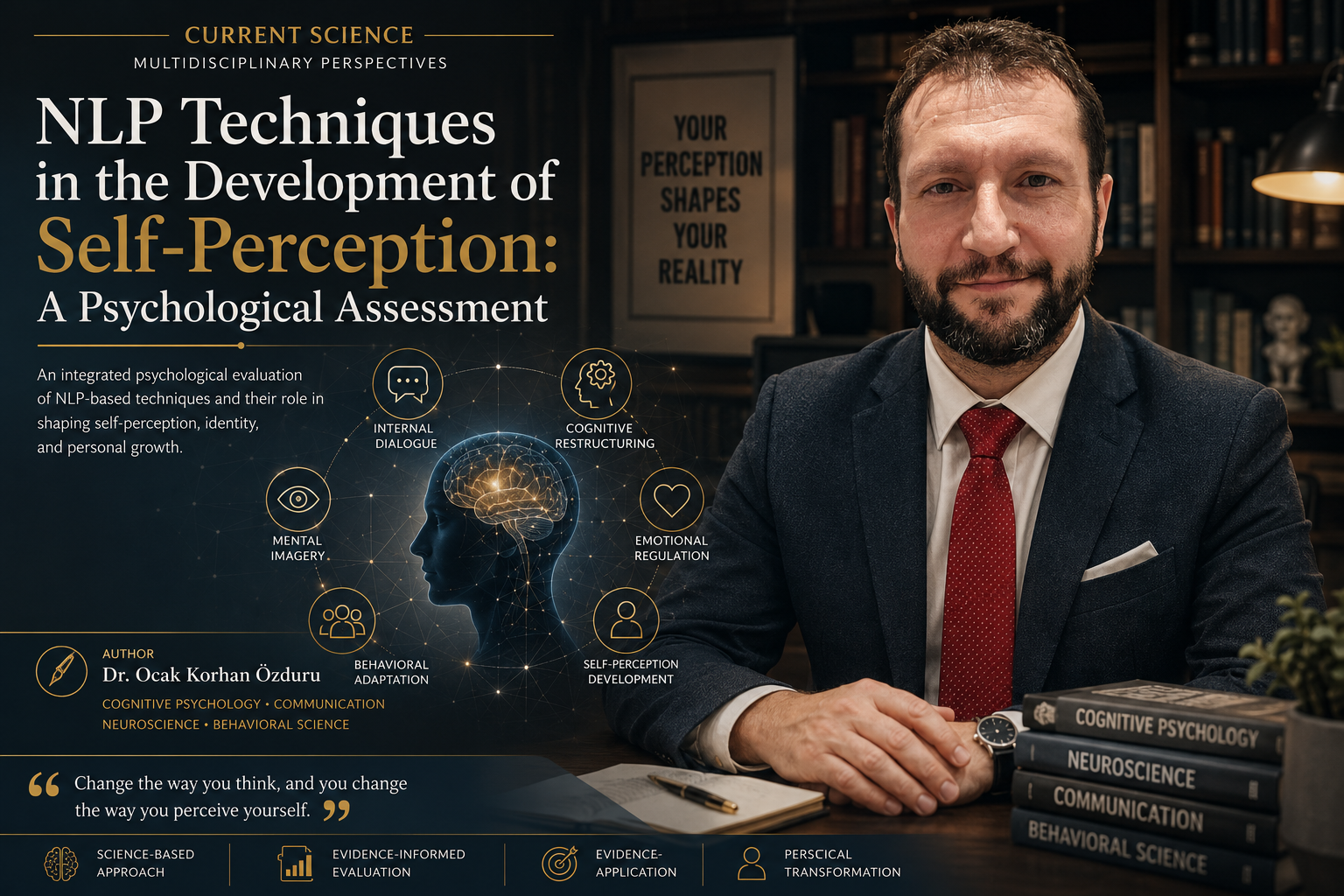
In the article “NLP Techniques in the Development of Self-Perception: A Psychological Assessment,” authored by Dr. Ocak Korhan Özduru, self-perception is presented as a dynamic psychological process continuously shaped by cognition, emotional regulation, language, behavior, memory, and social interaction. Rather than accepting or rejecting NLP as a complete psychological system, the study evaluates individual NLP-inspired techniques according to contemporary theories in cognitive psychology, neuroscience, behavioral science, and communication research.
At the center of the research is the introduction of the Self-Perception Cognitive Integration Model (SPCIM), an original conceptual framework developed to explain how adaptive self-perception evolves through the interaction of five interconnected psychological domains: cognitive interpretation, emotional processing, linguistic framing, behavioral feedback, and social context.
The article argues that self-perception is not an objective reflection of reality but a continuously reconstructed psychological experience. Personal beliefs, emotional states, internal dialogue, autobiographical memories, interpersonal relationships, and environmental influences collectively shape how individuals understand themselves throughout life.
The study also explores several communication-based techniques frequently associated with NLP, including cognitive reframing, guided mental imagery, attentional regulation, internal dialogue modification, and reflective self-observation. Instead of presenting these techniques as universally effective interventions, the author evaluates their potential psychological value by comparing them with established concepts found in cognitive psychology and behavioral science.
According to the research, techniques that encourage flexible thinking, balanced self-evaluation, and adaptive emotional regulation may contribute to healthier self-perception when integrated within evidence-informed psychological practice. However, the article emphasizes that no single communication technique should be regarded as a universal solution for psychological development. Meaningful change depends upon the interaction of multiple cognitive, emotional, behavioral, and social processes.
A particularly important contribution of the study is its discussion of language as an internal psychological mechanism. The article explains that self-perception is continuously influenced by the way individuals describe themselves through internal dialogue. Repeated negative self-statements may reinforce maladaptive cognitive schemas, whereas realistic and adaptive cognitive restructuring can support psychological resilience and healthier identity development.
The research further addresses the growing influence of digital technologies on self-perception. Artificial intelligence, social media platforms, virtual communication environments, and digitally modified representations of identity are presented as emerging psychological factors that increasingly shape how individuals evaluate themselves and others.
Beyond theoretical discussion, the proposed Self-Perception Cognitive Integration Model offers practical implications for psychologists, counselors, educators, executive coaches, organizational consultants, sports psychologists, and mental health professionals. The framework encourages interdisciplinary collaboration between psychology, neuroscience, communication science, education, and behavioral medicine while providing a structured model for future empirical investigation.
By integrating contemporary cognitive psychology with carefully evaluated communication-based techniques, “NLP Techniques in the Development of Self-Perception: A Psychological Assessment” contributes a balanced scientific perspective to one of psychology’s most fundamental questions: How do individuals construct the perception of who they are?
Rather than promoting generalized assumptions, the study advocates rigorous scientific evaluation, interdisciplinary research, and evidence-informed psychological practice. Through the introduction of the Self-Perception Cognitive Integration Model (SPCIM), the article establishes a contemporary conceptual foundation for future investigations into identity development, cognitive flexibility, psychological resilience, and lifelong mental well-being.

