

BATUMI, Georgia — A series of photographs, official submissions, and documentary materials concerning a privately established mineral and precious stones museum in Georgia has renewed discussion about the protection of scientific collections, evidence preservation, and institutional responsibility.
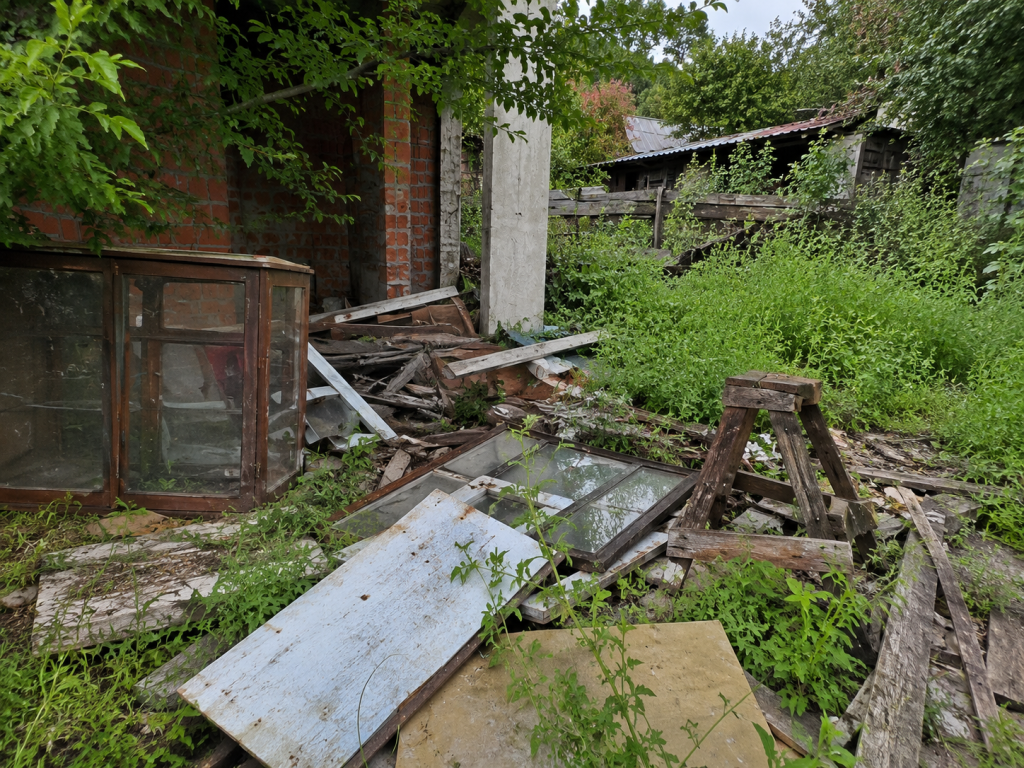
The case, now being documented as part of a broader research initiative on scientific heritage protection, concerns a geological collection reportedly assembled over more than three decades through international fieldwork, acquisitions, and scientific documentation.
According to the case file, concerns regarding the preservation of the collection and its supporting museum infrastructure were formally communicated to several Georgian institutions months before the most recent photographs emerged. Those photographs, now circulating as part of the documentary record, appear to show exhibition structures, educational display panels, and museum-related materials stored outdoors under environmental exposure.
The images themselves do not establish legal responsibility. However, they have intensified calls for an independent technical assessment of the collection’s current condition, inventory integrity, and preservation standards.
A Scientific Collection Beyond Monetary Value
Museum specialists frequently emphasize that the value of a scientific collection extends far beyond individual specimens.
Mineral collections represent years—sometimes decades—of geological research, cataloguing, documentation, educational interpretation, and public outreach. Their scientific importance depends not only on the specimens themselves but also on associated inventory records, identification systems, exhibition materials, and contextual documentation.
If these supporting elements become damaged or disconnected from the collection, the scientific value may be significantly reduced even where individual specimens remain physically intact.
For this reason, museum conservation experts generally recommend that scientific collections be maintained under controlled environmental conditions with documented inventory management and regular condition assessments.
Questions Raised by the Documentation
The documentation assembled in the case file raises several questions that, according to museum and heritage professionals, would normally require independent examination rather than speculation.
Among them are:
- Under what conditions was the collection stored?
- Were museum conservation standards applied during relocation?
- Was the collection inventoried before and after transportation?
- Have all documented specimens been independently verified?
- Were preventive preservation measures implemented after concerns were reported?
These questions remain distinct from any determination of legal liability and instead concern the preservation process itself.
Official Notifications and Institutional Response
According to the submitted documentation, written notifications concerning potential risks to the collection were reportedly delivered to multiple public authorities before the current photographs were obtained.
The file indicates that concerns relating to preservation, documentation, and evidence integrity were communicated to relevant institutions. Additional documentation has reportedly been prepared for international organizations concerned with cultural heritage and scientific cooperation.
At the time of publication, the available documentation reflects the existence of submissions and correspondence. The effectiveness of subsequent institutional actions has not yet been independently evaluated within the scope of this report.
Why Evidence Preservation Matters
In cultural heritage management, preserving evidence does not simply refer to criminal investigations.
It also involves maintaining inventory records, photographs, exhibition systems, conservation reports, and documentation that allow future researchers to reconstruct the history and integrity of a collection.
Independent specialists note that once documentation chains are interrupted, reconstructing the original scientific context becomes considerably more difficult.
For this reason, many museum organizations recommend immediate documentation, inventory verification, and condition reporting whenever significant preservation concerns arise.
Calls for an Independent Assessment
Experts interviewed in similar heritage preservation cases consistently emphasize that independent technical examination offers the most reliable path forward.
Such assessments commonly involve specialists in:
- Museum conservation
- Mineralogy
- Geology
- Collection management
- Cultural heritage law
- Archival documentation
A multidisciplinary review can establish the present condition of a collection while avoiding premature conclusions regarding responsibility.
Scientific Heritage and Public Interest
Although this case concerns a specific museum, the broader discussion extends beyond one institution.
Scientific collections often represent decades of educational investment, international cooperation, and public scientific engagement.
Their preservation therefore serves not only individual owners but also researchers, students, museums, and future generations.
Consequently, heritage specialists increasingly argue that significant scientific collections should be evaluated within broader cultural heritage protection frameworks rather than solely through ordinary property disputes.
Awaiting Answers
As additional documentation becomes available, the central questions remain unchanged:
- What is the current condition of the documented collection?
- Has its inventory been independently verified?
- Were preservation standards adequately maintained?
- What institutional measures were taken following the reported concerns?
Until these questions are addressed through transparent and evidence-based assessment, the discussion surrounding the collection is likely to continue.
Rather than reaching conclusions, the available documentation highlights the importance of independent verification, scientific transparency, and effective preservation practices whenever significant cultural and scientific collections are involved.
